

Q&A: A Political Science alum answers the needs in the classroom as a school board trustee

Hudson Campbell once dreamed of running restaurants. He may have put down his kitchen knives since starring on Food Network Canada’s Wall of Bakers (true story), but his segue into studying political science was smooth as butter. And a few months ago, at just 20 years old, he proved it with his election to the Maple Ridge–Pitt Meadows Board of Education as B.C.’s youngest new trustee.
As part of the school board, Hudson helps oversee the quality of education in his school district. He’s balancing his four-year term with ongoing studies, having recently finished his program at Douglas and transferred to the University of the Fraser Valley to complete his Bachelor of Political Science. Now a few months into his term, we caught up with Hudson about his experience breaking into the political sphere.
What led you to run for school board trustee?
I find that people get involved in politics in two ways. Some people want to break into politics however they can, so they go for whatever positions they can as the first steps toward their long-term goals. The other option is to hold out until there’s an opportunity that really resonates with you.
For me, I was also very passionate about schools. In high school, I was one of the only kids there at the school board meetings, advocating for more funding and such. I felt like not enough was getting done when I was a student, so I waited until the next election I’d be eligible to run in, and I just went for it. There was never a thought for other positions because I specifically wanted to be on school boards.
What do you want to achieve during your time in office?
I ran under three key ideas: sustainability, truth and reconciliation, and student voice. I really want us to be working more closely with our Indigenous communities in how our school system runs. And I want us to really be listening to the people who are working and learning in the classroom, whether that be students, teachers, principals or others. That’s how we can make improvements that answer people’s needs. There’s a demand for safer schools, not in the sense of more policing, but in the sense of physical infrastructure and constructing new buildings. And in general, we need more funding in public education.
No matter what level of government, there’s often a big disconnect between the people and the governance. People don’t know how they can create change. Overall, I’d like to work on empowering the youth and staff, so we can make some of that change together.
What is your best memory from the campaign trail? What’s the worst?
My best memory was just getting out and meeting everyone. That was so much fun: going to all the events, going to all the meet-and-greets and round tables, having great conversations with different community members, meeting so many community leaders, whether they won or lost in the election.
The worst part, though, would be how overpowering it all felt. It’s a two-month whirlwind, two months of holding your breath, walking on eggshells, checking messages every minute and answering questions. You’re always on the campaign trail, if that makes sense, whether you’re just going and grabbing a bite with your friend or you’re at an event.
How did you manage the stress of the campaign?
I found myself getting a lot better about putting my phone away before bed. Before that, I would catch myself scrolling through social media for hours, answering comments, looking at what other candidates were posting. It was so consuming, and eventually it became such an echo chamber, too.
Much of the buzz around your campaign centered on your how young you were compared to other candidates. Did you feel conscious of that age difference on the campaign trail?
It was absolutely a part of things, whether or not I wanted it to be. The media, especially the local newspaper, really picked up the fact that I was one of two fairly young people running for school board seats. The community had mixed feelings about it. A lot of people thought it was great to have more youth voices involved, while others said the opposite — we were so young, so what did we really know?
What did it feel like when you heard that you won?
It was so unreal. I mean, people who didn’t even know me were checking off my name on their ballots, just from reading about me in the newspaper. That’s unbelievable. That’s just so cool to me. Since then, I’ve even had people stop me at the grocery store, like, “Oh, I voted for you.” I’m just so honoured to have been the chosen candidate.
What has your time in office been like so far?
Honestly, the board that we were elected to is awesome. We have a great superintendent and great upper-level district staff, all of whom welcomed us with open arms. They’ve given us all the resources that we’ve needed and put us through rigorous training. We even did an eight-hour lecture on Roberts’ rules of order at the beginning!
Over the past few months, how have your original goals evolved?
They’ve definitely gotten more specific. For example, when I was running for office, I campaigned on “student voice” in a broad sense. While I certainly had a high-level sense of what I wanted to work toward, I lacked a practical sense of what the execution and methods to achieve that could look like. Now I have specific policies that I want to target to be able to improve student voice. The same goes for my other goals, like sustainability. I have more direction now, and I know exactly what I need to do.
Your term in office is four years. What do you want to do after that? What are your personal goals?
At the end of the day, I’m only 20; I have so much in my life ahead of me. So I’m open to whatever comes next. But I’d love to keep working in politics. Along with the school board, I also do constituency work for my local MLA. And I’m still aiming for my degree in political science, so I want to finish that at my own pace, too. Once I’ve served my full term on the school board, I’ll look for my next opportunity to do the work I want to keep doing.
Setting the tempo: Music alum rocks between the band room and the stage

For Evan MacNamara, drummer extraordinaire, the Diploma in Music at Douglas College was the perfect opening act. It laid the groundwork for him to transfer to UBC’s Dual Bachelor of Music and Education, one of Canada’s most prestigious music programs.
“Douglas was an approachable first step to the education I wanted,” Evan says. “I jumped on the train late when it came to studying for a music career. The program gives you a really strong base even if you’re starting from zero. So I had the chance to build myself up until I was ready to impress any panel of judges, even in the most daunting of university auditions.”
Evan made an impression at Douglas from the very start. In his first year, he earned the prestigious Marg Beaudoin Memorial Music Scholarship, worth $2,000. He also performed at Douglas’s graduation ceremonies in 2022.
The band marches on

Now a third-year student at UBC, Evan’s program allows him to move deftly between the classroom and the stage. He’s getting more opportunities than ever to build his ensemble experience and collaborate with his classmates on hands-on projects. Thanks to that, he’s growing the type of professional network that’s essential for many musicians to build community and find opportunities.
But his most eye-opening experience happened in neither a university classroom nor a stage. Instead, it was in a high school while acting as an assistant teacher for a choir. Every Friday, he went to an East Vancouver school’s practices to help students develop their musical skills. Though “not a choir person,” he felt his own skillset gave him a unique perspective that let him connect with the students and support their learning.
“With my general knowledge of musicality, I still managed to bridge the gap and help them understand the principles they were having trouble with,” Evan says. “It landed outside my expectations of what teaching would be like. But that’s part of what made the experience so valuable.”
Read more: “Top brass: This music alum and her saxophone build community through their sound“
Finding his beat
Evan’s been playing the drums since elementary school, but he didn’t consider a career in music right away. He started out studying information technology at another institution before making the switch. The Diploma in Music at Douglas seemed like the best pathway to a career in music.
From the quality of instruction to the friends he made, the program’s supportive community gave Evan a sense of home.
“You spend your time in nearly all the same classes as one another,” he says. “In our time as a cohort, I probably spent more time in our music hallway than I did in my actual home.”
Though Evan’s class has graduated and gone their separate ways, he hasn’t lost steam on his musical journey. He’s continued to secure gigs and carve out his place in the local music scene, playing at all sorts of events – and getting paid.
“It’s really cool, that first time you’re able to call yourself a paid gig musician,” Evan says. “You get your name out there, and suddenly you’re getting invited to ceremonies and weddings and more. Your reputation only snowballs from there.”
Meanwhile, back at UBC, Evan’s deciding what level of education he wants to teach. His instructors at Douglas have inspired him to aim for college classrooms.
“All my instructors were super experienced. They’ve done everything,” Evan says. “I’d love to be someone like that, ready to teach what I know to musicians starting out.”
Learn more about Douglas College’s Diploma in Music program here.
Creating safe spaces: How a Therapeutic Recreation student is championing trans-inclusive policies

By Ming Yeung, Marketing and Communications
As a trans non-binary personal trainer, Anna Parrish knows better than anyone how hard it can be for trans folks to take part in sports and recreation. The feeling of alienation they felt in the gender-assigned facilities nearly stopped them from participating. That’s why Anna is asking policymakers to create trans-inclusive policies and staff training within recreation facilities via their research.
Since they earned their Bachelor of Kinesiology at the University of Alberta 10 years ago, Anna has been training a wide array of people while fighting to create safe and inclusive recreation spaces for gender-diverse populations.
Finding a holistic approach to health

One of Anna’s first opportunities to support their community was by creating TransFit in 2019 – B.C.’s first provincially supported trans-centric fitness program. Unfortunately, shortly after the TransFit program started, all classes had to move online due to COVID-19.
The pandemic upended Anna’s life. All the gyms temporarily closed, leaving Anna to lose the majority of their work for six months. They began to consider what else they could do for a living, but they didn’t want to completely switch gears or abandon their realm of expertise. So once Anna discovered Douglas’s Therapeutic Recreation program, they applied right away, ultimately entering as a Third Year Access student.
Anna is glad they made that choice. “What I love about Therapeutic Recreation is that it blends the physical aspects of health with other forms of health. It’s more based on counselling and supporting people emotionally. And that’s what was missing for me from personal training. It’s that extra piece of overall mental health, emotional health, social health, all these other things that don’t fall into the realm of physical health,” Anna says.
When choosing a research project for one of their classes, Anna saw an opportunity to explore a topic close to them – the factors that increase recreation engagement within the transgender community in the Lower Mainland.
“A one-size-fits-all approach is not going to be effective because of all the variation in trans people’s experiences, so it is important for policymakers to be educated on the different experiences within the community.”
They wanted to explore this topic because much of the existing research on transgender recreation engagement focuses on trans men, trans women and medical transition. Meanwhile, Anna feels that non-binary people are being left out.
“The studies that I’ve read are often reinforcing stereotypes around trans people and who they are. They don’t really include a lot of people like me who are other genders outside the gender binary,” Anna says.
“I wanted to look at what makes recreation better and safer, and what actually works. Rather than focusing on all the barriers that prevent trans people from engaging with recreation, I’d ask what creates more safety and inclusion, and what actually helps people feel they can access things safely.”
Getting older and feeling less safe
Anna collected data through an online survey of 13 anonymous transgender individuals, ages 26-53, who engage in recreation.
They found that trans people’s feelings of safety within recreation were shaped by all kinds of factors. One major factor was the environment – participants felt safer when there were universal washrooms or changerooms available. But the study reveals that internal factors such as body satisfaction and fear of transphobia also have a significant impact. And that fear could hinder trans people from using them.
“On the one hand, they feel scared that they’re going to be discriminated against. On the other hand, they may feel unhappy with their bodies and unsafe moving them in front of other people.”
One significant finding in Anna’s study was that as trans participants got older, they felt less safe in gender-segregated spaces. Anna explains that trans people’s experiences in childhood and adulthood dictate how safe they feel about participating in recreation activities.
“People have pivotal and formative experiences around recreation in school when they’re playing games with their classmates,” Anna says. “Very often, these groups are segregated based on gender. There are different changerooms in school based on gender, so trans kids often feel uncomfortable from a pretty young age.”
“Maybe they don’t know they’re trans yet, but they know they don’t fit in.”
Anna’s study also looks into the impact of social and medical transition on trans people’s participation in recreation. The findings revealed mixed phenomena. Some people felt they could engage better post-transition and felt more affirmed in their bodies. But an equal number felt it decreased their engagement, and almost as many reported that their engagement levels didn’t change.
“I think that there’s a common misconception that transitioning fixes all problems. It doesn’t,” Anna says. “The experiences of transgender people can’t be generalized, because many factors impact internal narratives, experiences with transition and experiences in recreation.”
Educating policymakers and frontline staff
Trans-inclusive policy has been rolled out in different recreation organizations in the last few years in the Lower Mainland, but Anna points out that it’s important to recognize that the use of trans-inclusive policy is uneven within the Lower Mainland and even more so in the rest of B.C. and Canada.
In Anna’s opinion, these policies often fail to provide clear, specific direction on what to do when discriminatory situations arise for trans patrons. And that stems from a lack of consistent and appropriate staff training in the organizations.
“If you don’t know how to address the problems when they arise because the policy lacks clear guidance on what to do if and when people do certain things, chances are that the behaviour will not be addressed. The trans person in the room is the one who will be hurt,” Anna says. That’s exactly what Anna wanted to change through their research and advocacy.
“What I’m trying to do is make trans people feel seen and understood. I’m hoping to educate people about the complex experiences that trans people have, especially within recreation, and try to create motivation to revamp or create trans-inclusive policy.”
Anna believes policymakers and frontline service providers need to better understand the importance of removing gendered language and gender-segregated spaces. Organizations like QMUNITY and TransFocus provide training on this information, but it’s an area that is under-researched and needs more attention.
“A one-size-fits-all approach is not going to be effective because of all the variation in trans people’s experiences. It’s important for policymakers to be educated on the different experiences within the community,” Anna says.
Looking ahead, Anna plans to work as a recreation therapist with queer and trans individuals. Helping them find the confidence they need to engage in recreation and leisure activities that are meaningful to them.
Anna’s study won first place this year at Student Research Days, an annual event for students to present their research to the larger Douglas community.
This Sociology instructor is advocating for menstrual equity across the country

By Elizabeth Douglas, Marketing and Communications
Throughout Dr. Lisa Smith’s career, her expertise has been rooted in sexual and reproductive health. Now she’s on a mission to dismantle stigmas around menstruation and period poverty across Canada.

When people face period poverty, it means that they face a lack of access to menstrual products. This could be due to financial, social or geographical barriers. An overarching issue associated with period poverty is a lack of education about menstruation, which furthers societal stigmas and encourages it to be a taboo subject.
“In our research, menstrual education was identified by almost all study participants as a key gap,” she says. “They highlighted that there is an opportunity to integrate and expand education through existing programs.”
Lisa explains that not everyone experiences menstruation or period poverty in the same way – everyone’s needs are different. These inequities are often tied to deeper systemic issues that limit access to sexual and reproductive health services, including menstrual supplies.
“If we really want to talk about what it means to dismantle stigma, it’s more than just having product.”
Steps forward in period equity
Today, the average Canadian spends nearly $6,000 in their lifetime on period products – a number magnified in rural communities. However, since there hasn’t been a nationwide study on period poverty, the full extent of the issue is unknown.
For a long time, menstruation has often been viewed as unclean, placing shame and embarrassment on those who menstruate. Lisa believes that for widespread change to occur, this preconception needs to shift.
“Improving access to supplies is such an important first step, but I’m definitely thinking about what’s next,” she says. “If we really want to talk about what it means to dismantle stigma, it’s more than just having product.”
Earlier this year, Lisa, Niki Oveisi (Associate director of Free Periods Canada and PhD candidate in Pharmaceutical Sciences at UBC) and Zeba Khan (founder and director of Free Periods Canada, and a Masters of Science in Reproductive and Developmental Sciences student at UBC), were granted research funding from Women and Gender Equality (WAGE). WAGE is a department of the federal government that works to advance equality across all genders. The department provided Lisa and her colleagues with $38,765.88 in funding for their project, Menstrual equity and period poverty in Canada: Current knowledge and future research directions.
This initiative stems from a larger plan for the federal government to provide $25 million of funding toward making period products more accessible to all Canadians.
“As a researcher in this field, I know there’s a lack of knowledge on this topic,” she says. “We were excited that the government was open to allowing us to look at the existing literature and data, as well as carry out some original research to fill in those knowledge gaps.”
Conducting research
Beyond analyzing traditional academic literature, research being conducted at a community level has been integral to filling in missing information, Lisa says.
“Some of the folks who are already doing that work, and are building knowledge about this issue, are really grounded within the community and understand the lived experience of period poverty – particularly those who are most often directly impacted by this issue.”
One of the organizations that helps address social issues in communities across British Columbia is United Way BC, which has been a frontrunner in campaigning for period product accessibility. Their Period Promise campaign collects donations to distribute free menstrual products to those lacking access.
During her research, Lisa and her team spoke with 31 individuals advocating for menstrual equity across the country. From these interviews, participants noted that the involvement of grassroots and non-profit organizations like United Way BC have led the movement to what it is today.
“Most menstrual equity advocates we spoke with were volunteers,” she says. “It was shocking to see how much the movement of menstrual justice is currently relying on uncompensated labour.”
In addition to the issue of undercompensated labours, Lisa realizes that communities face dramatically different problems, so it’s important to decide the most appropriate strategies to get products to people in specific situations.
“While research participants emphasized the importance of community connected organizations, they identified the need for an intersectional framework that addresses the high level of cultural diversity in the country, the impact of regional inequalities and the need to decolonize menstruation.”
Menstrual Cycle Research Group
In 2020, Lisa was at the forefront of creating the Menstrual Cycle Research Group (MCRG), a collective that brings together faculty, staff and students to engage in research and knowledge mobilization in support of menstrual equity and justice.

One of the group’s focal points was the Period Poverty Access Project. The project analyzed the lack of readily available period products in post-secondary institutions. The results of the MCRG’s research were undeniable – students, staff and faculty desperately required easier access to period products on campus.
Earlier this year, tampons and pads were made available for free in all washrooms across all three campuses in women’s, men’s and gender-neutral washrooms. Their collaboration with the Douglas Students’ Union for signage on this project lent greatly to explaining why those products were added to all washrooms.
“Seeing these products across campuses was an exciting moment for me as a researcher,” she says. “I feel really proud to be a member of the Douglas College community, one of the first colleges to make menstrual supplies freely available across campuses.”
Lisa is looking forward to continuing to grow the conversation about menstrual equity in Canada and hopes that the MCRG can contribute research that is engaging with and connected to the broader movement.
During the Summer 2023 semester, Lisa will be presenting her findings at the conferences, the Canadian Sociological Association Annual Conference and the Menstruation Research Network in St. Andrews, Scotland.
Student researcher unveils why mirrors could affect dancers’ body image

By Ming Yeung, Marketing and Communications
When Cara Paley was two, her parents signed her up for a dance class. She vividly remembers the first time she walked into the studio. Mirrors covered every wall, from floor to ceiling. Like many children, she enjoyed watching her moving reflection.

She hasn’t stopped dancing since. In fact, Cara has danced practically all her life, training in various styles before focusing on highland dancing at 12 years old. She is well aware of the fixation some dancers have with developing a long, slim physique — the traditional “dancer body.” Cara believes that the mirrors nearly every dancer grows up with contribute to this mindset, which is why she decided to conduct a research project to find out if they are the reason for negative body image in the dance community.
“Mirrors have been a learning tool in almost every class I’ve attended,” Cara says. “My teachers’ focus was mainly on using them to perfect movement execution. But if you’re a dancer looking at yourself, it’s easy to start critiquing your physical appearance and the shape or size of your body.”
Cara, now a fourth-year student in the Bachelor of Physical Education and Coaching (BPEC) program, launched a study in January this year to investigate the influence of mirrors among dancers trained in a broader range of dance styles. Cara’s study specifically focused on mirrors’ effects on behavioural body image – or the behaviours dancers engage in because of their body image – regarding eating patterns and habits. Studies have shown that persistent body image dissatisfaction is known to increase a dancer’s likelihood of developing an eating disorder. “Dancers spend hours surrounded by mirrors every day. So, I wanted to see how dancers from different styles perceived mirrors as being either beneficial or harmful,” Cara says.
“It’s not the mirror itself that creates body image dissatisfaction. Instead, in the dance training environment, it has the potential to amplify the underlying thoughts one already has about their body.”
Overcoming research difficulties
Recruiting study participants proved more difficult than Cara anticipated. She suspects this was a result of the sensitive nature of the study; that many dancers would find it challenging to open up about their personal experiences with body image and eating patterns.
“You’ve got to be brave to put yourself out there and talk about those things,” she says.
Cara recruited six participants in total, all women 24–32 years old, to partake in an interview and her Multidimensional Body-Self Relations Questionnaire.
After reviewing her findings, she wasn’t surprised to see the dancers in her study scored poorer on body image satisfaction than adult women within the general population. And those with heavy training in ballet seemed to exhibit greater patterns of disordered eating and body image dissatisfaction.
Amplifying effect of mirrors
When Cara dug further into dancers’ eating patterns that played into their overall body image, she found two distinct mindsets. One set of dancers thought of food and eating as necessary for their dance performance and for maintaining their stamina. The other set talked about restricting their eating because they wanted to look a certain way in the mirror.
“This study suggests that it’s not the mirror itself that creates body image dissatisfaction,” she says. “Instead, in the dance training environment, it has the potential to amplify the underlying thoughts one already has about their body. At the same time, it influences their behaviours associated with appearance, such as eating patterns.”
How and when to use mirrors in training
With minimal research looking at the overall impact of mirrors on dancers’ body image, Cara thinks that her research could help inform teachers on how to best support their dancers.
Age could be a crucial factor in determining the right time to incorporate mirrors in training, if more research across age groups were done, she says.
“I would think a teenager would be more impacted by a mirror. That’s when your body is changing and you’re feeling insecure about things. And that’s when I think we see the highest dropout rate among dancers.”
Cara says she values the hands-on experience the Sport Science Applied Research course has afforded her. It’s instilled a passion for research and a quest for her to learn more. “I like talking to people and I like finding things out in areas that I’m passionate about,” she says.
Moving forward, Cara will be working on a larger scale project with Sport Science instructor Dr. Dominique Falls to further investigate the relationship between mirrors and body image. This study will expand its focus to include male and gender non-binary dancers as well.
Cara’s study won her third place this year at Student Research Days, an annual event for students to present their research to the larger Douglas community.
An ear for the industry: How this Hearing Instrument Practitioner student is helping others through lived experience

By Elizabeth Douglas, Marketing and Communications
When it comes to the importance of perfecting hearing aids, Nicolette Barnes knows better than anyone.
Nicolette – who has hearing loss – was at her own hearing aid appointment when she decided that she wanted to help others improve their hearing. She started looking into local programs and found the Diploma in Hearing Instrument Practitioner (HEAR) at Douglas.
“It’s not just about helping you hear.
It’s about helping you feel able to live well.”
“As a hearing aid wearer, I can understand some of the issues clients experience with their hearing aids and the adaptation of learning to live with them. I understand the struggle from personal experience, not just textbook learning.”
Nicolette explains how crucial it is to make sure that clients are happy with their fitting and that they feel comfortable coming back for follow-up appointments if something doesn’t feel right. It can be exhausting trying to strain to hear the world around them.
“I think it’s a bigger deal than a lot of practitioners realize. They’ll tell clients to try and get used to the hearing aids,” she says. “But it doesn’t work that way. That’s like putting in somebody in size zero pants when they’re size four and telling them to just accept it. They’re going to be uncomfortable all day, every day in those pants.”
Not only will people be uncomfortable, but the motivation to do things they enjoy will diminish, Nicolette says. It isn’t always easy, but it is crucial to each client’s well-being.
“As practitioners, we can give them all that enjoyment back simply by working with them to find a balance that will provide them with the most audibility and create a comfortable listening environment,” she says. “Because it’s not just about helping you hear. It’s about helping you be able to live well.”

Feeling supported
As a student with hearing loss and entering this industry, Nicolette has felt supported every step of the way.
“When we test hearing we wear a headset, but that could be an issue for people who wear hearing aids themselves,” she says. “My instructors have taken the time to show me different techniques for using the headset with my hearing aids.”
Through the HEAR program, students take part in two practicum placements at local hearing centres. So far, Nicolette has completed one of her placements, where she was matched with a Costco clinic in Abbotsford. Not only did she learn about medical referrals, testing and fitting, but her mentor also had hearing loss.
“The practitioner I was working with had hearing aids himself, and he told me that we actually have an advantage in the industry as hearing aid wearers because we understand the clients so much better.”
Satisfaction guaranteed
Between sales, manufacturing, clinical work and more, there are many career paths in the hearing health industry. No matter what avenue she chooses, Nicolette will be entering a career where she can truly help people just like her.
“I’ll tell my clients to come back and see me 200 times if they have to. It won’t take that long, but I want to make sure they’re completely satisfied.”
Interested in the Diploma in Hearing Instrument Practitioner program at Douglas College? Visit our website to learn more: https://www.douglascollege.ca/program/dphear
2023 Student Leadership Awards winners announced

Last night, the Student Leadership Awards ceremony honoured this year’s winners and nominees. The awards are given to students, faculty and staff who have shown themselves to be leaders through their outstanding contributions to the College. 150+ guests attended to show their support.
Congratulations to all the winners and nominees of the 2023 Student Leadership Awards.
Student Leader Award

Axel Bernoe, Bachelor of Business Administration in Marketing – WINNER
Axel is one of those people who genuinely loves socializing and being involved in building community. Whenever I see him in the concourse or watch him host an event, I observe his friendly, approachable attitude and the ease with which he interacts with his fellow students and attracts them to the activity he’s overseeing.
He is confident and comfortable speaking with fellow students, and I am always in awe when I see how well students respond to him.
- Jayden Haywood, nominator

Bailey Cove, Bachelor of Physical Education and Coaching – WINNER
Bailey has put more effort and time into engaging the student community than any student I have known in my five years at Douglas College. She truly cares about her peers and consistently strives to create positive opportunities on and off campus.
As the president of the Sport Science Student Council, Bailey has taken to the leadership role beautifully, overhauling some existing structures and working to ensure the council is doing whatever it can to offer support, opportunities and engagement to our students.
- Shawn Hetherington, nominator

Jenny Bui, Bachelor of Business Administration in Management – WINNER
One of Jenny’s strengths is connecting with all types of people. She makes them feel welcomed and at ease. Many of the volunteers who have joined the Career Centre Volunteer program talk about the close-knit community the program provides them. This would not be possible without Jenny’s infectious personality, which contributes to the uplifting and inspiring space. She asks great questions to clarify what you want and actively seeks feedback on ways to improve.
- Lilian Truong, nominator

Martha Alejandra Espinoza Munoz, Diploma in Marketing – WINNER
Martha has great leadership and social skills. She is able to encourage people to achieve goals with great passion and enthusiasm. She is always friendly and polite, but professional and cautious too.
I have never met someone more empathetic, caring, supportive and kind. It is people like Martha who make the way for the rest of us to enjoy a peaceful, functioning, and happy world.
Most of her work is purely altruistic; she has never received payment or compensation for her service to the College and the community, all while working, studying and raising two children alone as her husband is far away due to work.
- Antonio Alejandro Hoyos Espinoza, nominator
NOMINEES for Student Leader Award
Congratulations to all the students who were nominated for the Student Leader Award.
- Aamish Arora
- Aryan Dhamankar
- Daniel Villasenor
- Danna Domasig
- Denise Smadello
- Emmaline Ruby Damon
- Gabriel Santos
- Gurjot Singh Bawa
- Himadri Joshi
- Jasper Brodie
- Maya Moalla
- Mort Zowghinia
- Myat Noe Pwint
- Myungsan Yun
- Oommen George
- Taydra TenBroek
- Nat Gingerich
Up and Coming Student Leader of the Year Award

Ava Ferenc, Associate of Arts in Environmental Studies – WINNER
Ava is a dedicated student who has made a positive impact on the College community through her role as a Coquitlam Campus Representative for the Douglas Students’ Union.
While maintaining a high GPA and a notable presence on campus, Ava takes initiative in her work to always make students and community members feel welcome, safe and comfortable within College spaces.
- Andew Dalton, nominator

Jasper Brodie, Associate of Arts in Gender, Sexualities and Women’s Studies – WINNER
Jasper has been a stand-out Student Assistant with Indigenous Student Services. Jasper has shown an ability and desire to go above and beyond to increase student engagement through planning, organizing and running biweekly arts and crafts sessions in the Indigenous resource centre.
- Nova Macleod, nominator
NOMINEES for Up and Coming Student Leader of the Year Award
Congratulations to all the students who were nominated for the Up and Coming Student Leader of the Year Award.
- Amari (Mariana), Barillas Flores -Calderon
- Aryan Dhamankar
- Benjamin Li
- David Marin Mejia
- Jackkson Newton
- Jenny Bui
- Sam Lima
- Shrishty Jain
- Shivani Prakash Ithawar
Outstanding Contribution to Student Engagement by College Staff or Faculty Member Award

Irene Chan, Facilitator, Accessibility Services – WINNER
Without Irene’s outstanding dedication and professionalism, I would not have been able to provide my students with anything remotely close to the learning experience that they have in my courses. On many occasions, Irene has supported me without any hesitation whatsoever with all sorts of new requests regarding the exams for my Computer Programming and Game Development courses. Irene is immensely respected by anyone who has had the pleasure of working with her.
- Shahriar Khosravi, nominator
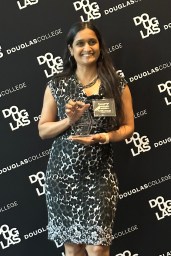
Padmapriya Arasanipalai Kandhadai, Instructor, Computing Studies and Information Systems – WINNER
Padmapriya believes each student has potential and she gives a letter of reference to ensure students achieve their career goals. She provides a safe and inclusive environment for everyone in the class to share their thoughts and questions.
I really appreciate the way Padmapriya motivates each and every student.
It’s clear she loves to teach. She offers deep connections to her students. It gives her great inspiration to see her students achieving their dreams.
- Jain Shrishty, nominator
NOMINEES for Outstanding Contribution to Student Engagement by College Staff or Faculty Member Award
Congratulations to all who were nominated for the Outstanding Contribution to Student Engagement by College Staff or Faculty Member Award.
- Caleb Cheek
- Eugene Dy
- Pauline Low
- Saeed Mirjalili
- Shahriar Khosravi
- Will Gunton
Global Citizenship Dean’s Award

Derek Graham, Applied Community Studies – WINNER
Ignacio Yanez, Commerce and Business Administration – WINNER
Neda Azimi, Humanities and Social Sciences – WINNER
Phyllis Leung, Health Sciences – WINNER
Milica Savic, Language, Literature and Performing Arts – WINNER
Sandra Chiorean, Science and Technology – WINNER
Learn more about the Student Leadership Awards on our website.
The complicated history of Paldi, B.C.’s earliest multicultural community

By Fenn Stewart and Jastej Luddu
In 1917, Punjabi Sikh immigrants founded Paldi, a logging community in the old-growth forests of Vancouver Island, seated on unceded Cowichan territory near Duncan, B.C. For the next 50 years (until the nearby forests were logged out) Paldi was home to a diverse community of Sikh, Chinese, Japanese and white workers and their families. This community practised a range of religions and cultural traditions. It included an elementary school and a gurdwara, or Sikh temple. Each year, the residents of Paldi held a large celebration, or jor mela, on July 1.
As researchers of Canada’s history of colonialism and anti-colonialism, when we learned of Paldi two years ago, we were obsessed. We had never heard of an early Canadian resource-extraction community founded, and led, by people of colour.
Moreover, we were struck by how so many former Paldi residents – and their descendants – have described it as a kind of multicultural utopia. In fact, Paldi is often called a microcosm or blueprint for Canadian multiculturalism — an early example of national diversity.
For the past two years, supported by a Douglas College Research and Innovation Grant, we’ve been researching Paldi’s history, as well as representations of the community. We’ve been looking into the accuracy of Paldi’s reputation, and investigating how the real story of this community might enrich our understanding of early B.C. history.
The history of Paldi

Paldi’s founders were Punjabi men who had previously worked in white-owned mills in the Lower Mainland and the Fraser Valley. These men and their families endured systemic racism on several counts. Paid less than their white counterparts, they faced racial harassment from government officials and business owners. The men couldn’t vote. And for years, their loved ones couldn’t join them because B.C. barred the immigration of women and children from India.
At the time, Canadian political leaders were frank about their desire to exclude Indian (and other Asian) immigrants. For example, B.C. Premier Sir Richard McBride insisted that Canada was a “white man’s country.” Vancouver’s Conservative M.P. Henry Herbert Stevens claimed that Canada would be “swamped with Orientals” if Asian immigration was allowed. (Atkinson 2016)
Under these conditions, dozens of Punjabi Sikhs decided to start their own mill rather than keep working for less pay. This was where Paldi began. In fact, the community was founded just three years after the 376 Punjabi passengers from the Komagata Maru were prevented from landing in Vancouver by police and immigration officials.
In contrast, Paldi was a place where Chinese, Japanese, Punjabi and white kids grew up together. This was long before this became common in (some) other parts of the country. The photos of Paldi schoolkids are in black and white, and the kids in the pictures are wearing old-fashioned clothes. Even so, they remind us of our own years in school in Vancouver and Surrey, nearly a century later.
The limits of Paldi’s diversity

Since we began this project, we’ve travelled to Paldi several times. We’ve interviewed local residents and made visits to archives on Vancouver Island and in the Lower Mainland. We’ve worked with student researchers – Kyrstyn Llagas, Kudratdeep Kaur and Daksh Shokeen – to compile online material in English and Punjabi.
We’re still impressed with what Paldi’s residents accomplished in creating a diverse community in early 20th-century B.C. But we’ve also learned that its story is more complicated and less comfortable than the one often told in public.
Despite the glowing descriptions of Paldi’s multicultural community, with its supposed absence of racism, we have found almost no references to Indigenous people in or around Paldi. We’ve found no mention of the local First Nations communities whose lands it was built on, and whose forests the residents were busy clear-cut logging.
What does it mean to celebrate Paldi without acknowledging how its diverse workforce also contributed to the project of settler colonialism? How might a more honest portrayal of Paldi’s history honour its residents’ achievements while making space for the fact that these struggles took place on lands that the Cowichan peoples are still fighting to reclaim?
We’re also uncomfortable with the way much media coverage of Paldi has avoided acknowledging B.C.’s history of systemic, legalized racism. As other researchers have argued, popular celebrations of multiculturalism in Canada often gloss over the many forms of racism and colonialism that have continued in the years since 1971, when the federal multiculturalism policy was introduced.
According to scholars such as Himani Bannerji, Richard Day and Sunera Thobani, Canadian multiculturalism policy, and popular understandings of it, generally contain difference, “exalt” the white settler nation (Thobani), and limit more radical efforts toward racial justice and anti-colonialism.
Looking to the future

So, what does it mean to describe Paldi as “multicultural”? Do these media representations sacrifice the real story of Paldi to portray Canada as “multicultural” from its beginning?
Our research confirms that life in Paldi did contrast starkly with the experiences of people of colour in nearby white settler communities. But depictions of Paldi must recognize that its relative safety did not emerge from government support for multiculturalism. Rather, Paldi existed despite barriers created by Canadian governments. Further, while the community differed from white-settler B.C. in a number of key ways, Paldi’s history also connects to the broader context of settler colonialism, in which resource extraction takes place on Indigenous lands without Indigenous consent.
Over the next six months or so, we’ll continue writing up our findings. We hope to submit an article to the journal BC Studies by next summer. We’ll also be sharing our findings at this year’s Congress of the Humanities and Social Sciences conference in Toronto.
This year, a new Canadian Heritage Minute dedicated to Paldi will be released. What version of the story of Paldi will it tell?
***
Fenn Stewart is regular faculty in the English Department at Douglas College and occasional faculty at UBC. Jastej Luddu recently finished a Master’s in Social and Political Thought (York University). He is the Communications and Story Producer at 221a, a Vancouver-based arts and culture non-profit. Fenn and Jastej’s recent collaborations include an article in Briarpatch about Mewa Singh, a post on the Oecologies blog about decolonization and the end of the world and, with Afuwa, a forthcoming guest-edited special issue of The Capilano Review, focused on “bad feelings.”
Disclaimer: This article is a guest submission from Douglas College faculty and colleagues. Opinions expressed in this article belong to the author(s) and should not be taken as statements made by Douglas College.
Douglas College launches Canada’s first Bachelor of Science in Health Information Management

Professionals in health information management (HIM) form the unseen spine of Canadian medicine and health care. Despite their necessity, there just aren’t enough trained HIM experts to fulfil the demands of our strained health care system. And while information managers in the field currently bring valuable skills to the table, many of them only hold one part of the puzzle. There’s been no one place in Canada to learn the complete mix of knowledge and skills and ground it in the health industry.
That’s why Douglas College is leading on filling the gap with the new Bachelor of Science in Health Information Management (BSc-HIM). This program provides the practical skills and experience needed to step up to the plate – whether you’ve already got experience in the sector or your passion for HIM is newfound.
“Introduce me to HIM”
Health information management is a line of work that focuses on gathering, analyzing, securing and sharing health-related data. To accomplish this, HIM professionals leverage a unique cocktail of skills – data analysis, project management, IT know-how and much more. The information they collect and analyze helps guide critical health care decisions made across the industry. This includes everything from nurses triaging in the ER to health authority leaders signing off on the latest best practices.
If you work in health information management, you’re part of a process that influences health care at every level. You’re showing leaders in government and health the facts that decide our hospitals’ policies and where we allocate tax dollars. You’re informing evolving best practices across hospitals while streamlining the flow of information needed by primary care teams. Most importantly, you’re helping patients get the fastest, most comprehensive care possible.
According to Dr. Patricia Visosky, coordinator for the Health Information Management department at Douglas and Vice-Chair of the Canadian Health Information Management Association, there’s not one decision about health care in Canada that gets made without insights provided by the HIM industry. Those insights blossom from the individual level upward, patient by patient.
“To build that essential body of information, there are things we need to know about every person seeking care. Their experience in treatment matters,” Dr. Visosky says. “But we miss chances to do better whenever we can’t capture that data or use it effectively.”
Right now, we don’t have enough trained HIM experts in Canada to meet the demands of the modern healthcare system. That exacerbates many if not all of the hot-button issues in health right now. Think about unacceptable wait times, a lack of nurses and doctors, hamstrung communication between care providers and more. But more health information managers means more capacity to investigate the best ways to support our frontline health care workers.
More than that, HIM professionals drive the innovations that lead to a simpler, less barrier-fraught experience for future patients. One major example is the way institutions transfer patient information, orders for medical tests, and more. There are historic cases where messages and requests have been missed, contributing to a real cost in human life. A famous Canadian example is the Greg Price case of 2012. A man lost his life to testicular cancer, partially because faxed referral documents and other information went missing in transit, delaying his diagnosis.
Dr. Visosky says the technology already exists to ensure up-to-date e-health records are readily available to everyone who needs them, including the primary care team, pharmacists, mental health professionals and the patient themselves. However, a bigger population of HIM professionals are necessary to build these systems and implement them across Canada.
“As soon as we hit ‘enter’ and a patient’s record is saved,” Dr. Visosky says, “whoever else needs it should be able to access it.”
The Douglas difference
The BSc–HIM at Douglas College is the first post-secondary program in Canada to train HIM professionals with the depth of a dedicated bachelor’s while also allowing for specializations through multiple pathways. You can choose to concentrate on information intelligence, operations management or the general stream.
Uniquely, this program offers the chance to do two internships at regional health organizations. There’s also an 180-hour supervised practicum in the health, government or private sector. With this applied learning, you get the hands-on training and mentorship opportunities you need to graduate ready to work.
With the demand for HIM-trained workers steadily rising, you’ll graduate on track to gain financial stability and further your career. That’s true whether you already work in health information management or are just starting out. The degree prepares you to start a well-paid job right after you graduate, in hospitals, government, health authorities, or even research and academia. The median salary for B.C. health care managers, for example, is more than $95,000. And over 19,300 jobs in HIM, database analysis, health care management and/or health policy research are projected for B.C. alone in the next 10 years.
Working in health information management empowers you to get patients in your communities and across the country closer to an ideal standard of care – one dataset at a time.
Want to explore your options with the Bachelor of Science in Health Information Management? The first intake is September 2023. Interested applicants looking to complete pre-requisites for the degree can enrol in our newly launched Academic Foundations certificate program. Read more.
A guiding voice: Youth Justice grad helps secure the futures of teens at risk

By Zach Siddiqui, Marketing and Communications
Kayla Gambler wanted an education that would help her better support Indigenous youth facing the same challenges she once did – living away from her community, and dealing with grief, trauma and substance use. She discovered the two-year Diploma in Youth Justice and hasn’t looked back.
“I love learning how to help youth navigate the justice system,” Kayla says. “When you don’t understand the laws in place and you see how unfairly people are often treated, it can be overwhelming. I’m gaining the knowledge I need to, hopefully, change things for the youth I work with piece by piece.”
The winding road to justice
Before Kayla studied at Douglas, she was a support worker in Vancouver’s Downtown Eastside. Through a recovery program run by a women’s resource organization, she helped women reduce their substance use while providing them with food, one-on-one support and harm reduction supplies.
The work was fulfilling, but it was also psychologically challenging. After a while, Kayla felt she was no longer able to be the person this community needed.
“There’s a lot that comes with that job,” Kayla says. “You’re seeing a lot of mental health struggles, addictions, trauma. The work burned me out. I realized I couldn’t give 100 percent to the women that I was supporting, not anymore.”
Kayla took a step back, choosing to continue her relief work on a part-time basis, and refocus on her education. She hoped to both rejuvenate herself and to reorient her career trajectory to something new in the same field. Considering her options at Douglas led her to the Diploma in Youth Justice. It fit perfectly into what Kayla felt was her next calling: provide support to youth in need, especially Indigenous youth.
“I wanted to work with youth. I wanted to work with high-risk youth. And I wanted to learn so much more about the external and underlying factors out there that shape their lives.”

Making sure the kids are all right
Acclimating to the Youth Justice program took Kayla some time. In her previous job, she was part of an Indigenous-led team working mainly with Indigenous women, a community she already felt deeply connected to. Leaving that behind to restart her studies made her feel uprooted. But she enjoyed the coursework and her cohort, and soon hit her stride.
“For lots of people, going back to school means long lectures and huge class sizes,” Kayla says. “It’s hard to connect with people. But I felt lucky to have a very different experience with my Youth Justice cohort – all great people going through this program together in a tight-knit group. I couldn’t imagine starting my college career any other way.”
The two-year Youth Justice Diploma features courses in behavioural theory, public policy, skill development and more. One of the program’s biggest attractions is the hands-on learning it offers through two practicums.
In her first year, Kayla did a five-week placement with ACCESS Youth, a local youth outreach service doing work on the ground with high-risk youth throughout the Tri-Cities. Kayla’s team was regularly stationed in Coquitlam’s commercial district – a hotspot for local youth – sometimes working until as late as midnight.
“We were there to keep them safe,” Kayla says. “If they were drawn into conflicts, then we connected with them and made sure they were OK. We were mediators between them and local businesses and mall security. We gave them resources: snacks, contraception, harm reduction supplies.”
Kayla was hired at ACCESS full-time after her practicum. She became their first youth worker whose portfolio focused on Indigenous outreach.
Rerouting the roots
Kayla’s applied learning will serve her even further once she graduates this summer. Her diploma and work experience will open doors to careers working with children, youth and families in community support, crisis intervention, judicial administration and much more.
But Kayla wants to take that to the next level by completing a Bachelor of Social Work.
“When I started my diploma, I’d originally planned to graduate and focus on my career,” Kayla says. “That’s a great option to have. Personally, I found an interest in continuing my education to further build my skills, to have the opportunity to do even better for the youth I want to work with.”
Kayla says her two years in Youth Justice have been rich with opportunities. She has a film project coming out, though the details are still hush-hush. She’s travelling this semester through the Indigenous Global Learning Program to the University of Hawai’i, where she will connect with local Indigenous communities.
Right now, she’s waiting to hear back from the University of Victoria about her application to transfer into their social work program, a move that would mean huge changes.
“I’ll have to figure out where I can work, and live, and set my roots. I’ll have to re-establish my life. But I’m so excited to take my experiences at Douglas, and everything I’ve learned here, and use that toward all my future achievements.”
You must be logged in to post a comment.